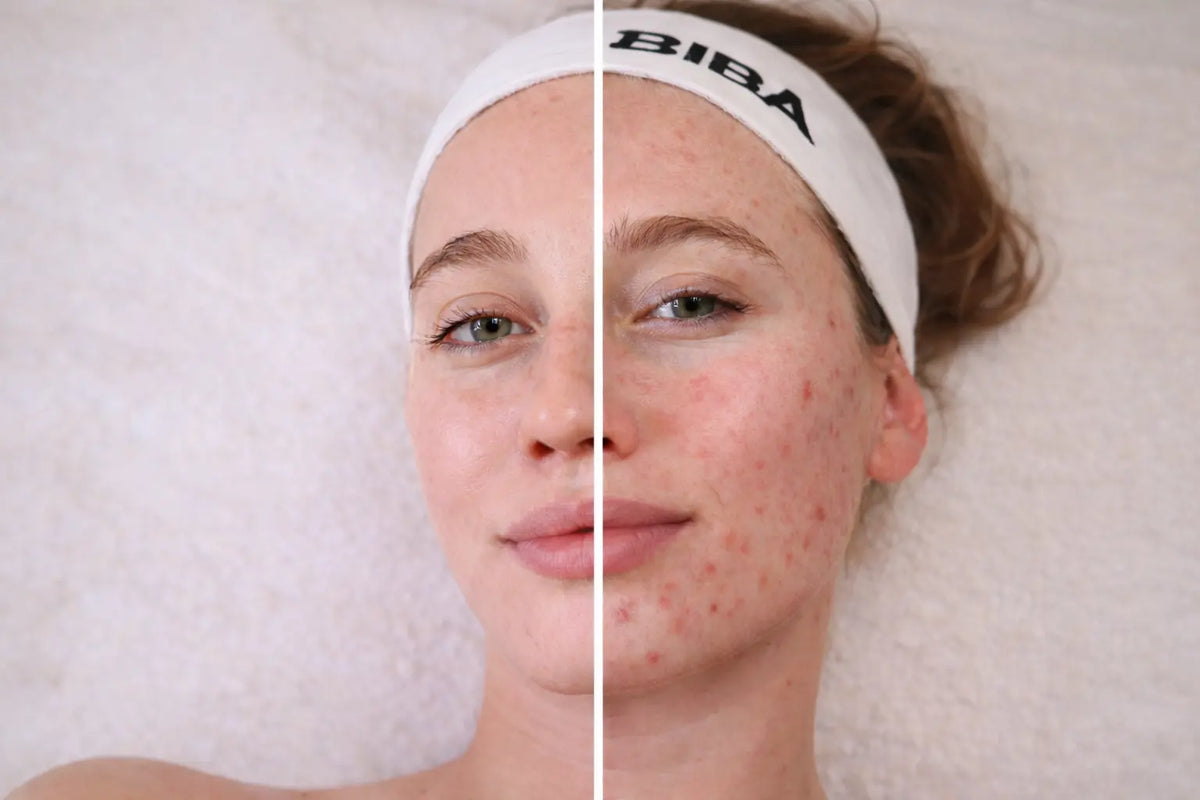

After more than two decades of working with skin, I have found that many skin concerns are created or made worse by the way the skin is being treated.
Sometimes that means doing too much: too many active ingredients, excessive exfoliation, aggressive treatments, or constantly changing products. But doing too little can create its own set of problems. I also see skin affected by routines built around extreme minimalism, where inadequate cleansing, hydration or exfoliation can contribute to dehydration, congestion and poor skin function.
In the treatment room, I regularly see skin that is irritated, dehydrated, inflamed, breaking out, developing hyperpigmentation, or simply not performing as well as it should. While the causes vary, many of these concerns can be traced back to a handful of common skincare mistakes.
Mistake #1: Mistaking Irritation for Progress
Many people believe that if one active ingredient is good, several must be better. They layer retinoids, exfoliating acids, at-home peels, scrubs, microneedling devices and multiple treatment products in an attempt to speed up results.
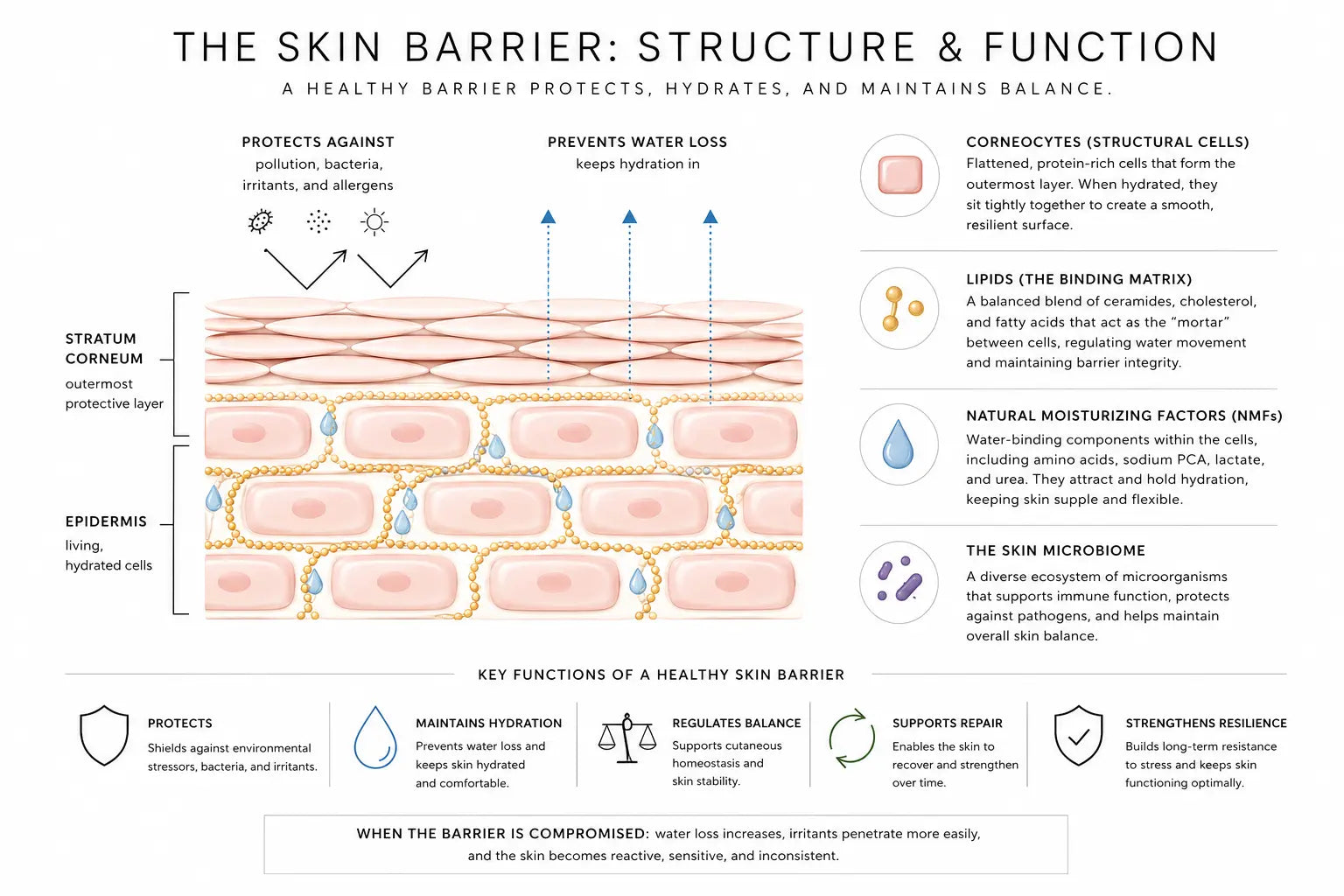
The result can be chronic inflammation, dehydration, sensitivity, redness, discomfort, rough texture, breakouts, hyperpigmentation and persistent barrier dysfunction.
One of the things I find particularly concerning is how often irritation is interpreted as progress. Redness, peeling, burning and tightness are sometimes taken as evidence that a product is working, when they may actually be signs that the skin is being irritated.
Skincare marketing has certainly contributed to this. Higher percentages and more concentrated actives are frequently presented as more effective, even though increasing the concentration of an active does not necessarily produce a better result and may simply increase irritation.
In the treatment room, I frequently see routines built around what I call “fire and water.”

Highly active products continually irritate the skin, followed by soothing, calming and barrier-supportive products intended to manage the inflammation the actives helped create. The routine creates the problem and then attempts to correct it.
Certain skincare trends can reinforce this cycle. Skin cycling, for example, was introduced as a way of spacing out active ingredients to reduce irritation. But spacing out a product does not necessarily make that product appropriate for the skin using it.
I also take issue with the popular concept of “purging.” Skin does not purge. If your skin begins breaking out, becoming irritated, red, itchy or inflamed after introducing a new product, it is reacting to that product or to the way the product is interacting with the rest of your routine. This is a reaction to the wrong product for your skin, not “purging.” Continuing to use it in the hope that your skin will eventually adjust can create additional problems.
Related reading: What Is the Skin Barrier? A Clear Explanation of Skin Barrier Function
Mistake #2: Doing Too Little
Mistake #2: Doing Too Little
On the other end of the spectrum are clients who rely on occasional treatments while doing very little at home.
A facial treatment can significantly improve the condition of the skin, but the products you use every day have far more opportunities to influence skin health than a treatment performed once a month. Dehydration, congestion, rough texture and other problems can develop simply because the skin isn't getting what it needs on a regular basis.
I also see clients who start with the best intentions. They invest in products, commit to a routine and see meaningful improvements. Then life happens: work becomes demanding. Travel picks up. Family responsibilities take over. Products run out and aren't replaced. Treatments get postponed. What begins as a temporary lapse can turn into months of doing the bare skincare and self care minimum.
Sometimes clients return to the treatment room having scaled everything down to basic cleansing, moisturizing and sunscreen. Others have become so disconnected from their routine that when something runs out, they simply reach for whatever happens to be available.
There is no judgment here. Life happens. I am here as your skin therapist to remind you to keep up with your routine, replace the products you've run out of and come in when it's time for a treatment.
There is another version of doing too little that concerns me much more: skincare minimalism presented as a philosophy of skin health. Social media has popularized the idea that much of conventional skincare is unnecessary, potentially harmful or “toxic,” and that skin is somehow healthier when we interfere with it as little as possible. These messages often question the safety, quality, efficacy and even the purpose of basic skincare products, playing on a broader fear that consumers are being misled by the beauty industry, science, or the establishment in general.
There are basic things we know skin needs. It needs to be properly cleansed, adequately hydrated and protected from UV exposure. Eliminating products that perform those functions doesn't make those needs disappear. Skin physiology is not changing with the trends.
Sunscreen is not an unnecessary cosmetic step. Unprotected UV exposure contributes to skin cancer, hyperpigmentation and premature skin aging.
Cleansing with water alone is not equivalent to cleansing with a properly formulated cleanser. Many substances that accumulate on the skin, including sebum and oil-soluble debris, are not readily removed by water. Surfactants are what allow a cleanser to emulsify and remove them.
Moisturizer has a function as well. Properly formulated moisturizers increase skin hydration and can support barrier function, and moisturization can reduce the appearance of fine lines associated with dryness.
There is nothing wrong with a simple routine, as long as it adequately cares for the skin. The problem begins when necessary steps are eliminated simply for the sake of using fewer products. Choose a minimalist approach that respects skin physiology and still provides adequate cleansing, hydration and protection.
Some facial treatments can certainly be done at home, but there are limits to what home care and at-home devices can accomplish. Handheld devices and inexpensive versions of professional equipment found online do not reproduce a professional facial treatment simply because they use the same technology or make the same claims.
There is also more to using a device than turning it on and moving it over the skin. The settings, technique, treatment time and the products used as a conductive medium all matter. Most consumers have not been trained to assess these variables or determine what is appropriate for their skin.
Even estheticians cannot perform a complete professional facial treatment on themselves. There are limitations to what any of us can realistically assess and accomplish on our own skin.
We don't scale our own teeth. Most of us don't cut our own hair. You can't effectively massage your whole body. Skin is no different.
Skincare devices can make skincare fun and give you more options at home, but don't forget that you are working on an organ. Just because you can see and touch your face doesn't mean you should heat it, peel it, needle it, stimulate it and prod it every day. There is no need to build an inventory of skincare devices at home. You probably don't own six hair dryers. Choose one or two trusted devices that you understand and will actually use, and leave professional facial treatments to your skincare professional.
Related reading: Where to Start With Skincare: A Simple Routine That Actually Works

Mistake #3: Letting Trends Dictate Your Skincare
Social media has created an endless stream of skincare advice. Every week there is a new miracle ingredient, device or routine promising dramatic results.
It also creates urgency. Consumers are encouraged to immediately try the next product or adopt the next routine, often before they have given what they're already using enough time to work.
The same influencer enthusiastically promoting a product, gadget or routine today may have been promoting something entirely different a few months ago. Marketing campaigns amplify that cycle by creating the feeling that you're missing something essential if you're not using whatever everyone is talking about right now.
Over the years, we've seen CBD skincare, facial oils for nearly every skin type, bakuchiol promoted as an alternative to retinol, snail mucin, water creams, skin cycling, slugging and countless other trends have their moment. Some of these ingredients, products and approaches have legitimate uses. That doesn't make them appropriate for every skin, necessary in every routine or, despite the hype, the fountain of youth.
Mistake #4: Using the Wrong Products
Every skin type and skin concern has specific needs, and the products used should be selected accordingly.
One of the most common things I see is people using perfectly good products that simply don't make sense for their skin or aren't doing anything useful in their routine.
Someone with oily, congested skin may be using a rich facial balm that provides little benefit while doing nothing to address excess oil, congestion or breakouts. Someone struggling with dullness, rough texture and clogged pores may be using only soothing and hydrating products while avoiding the exfoliation their skin actually needs. And someone with dry, dehydrated skin may rely on a hyaluronic acid serum without the moisturizer and lipids needed to help retain that water in the skin.
The issue is not always that a product is bad, but that it is simply the wrong product for the job.
I also frequently see products that are simply too harsh, too active, too heavy or too drying for the skin they're being used on. And sometimes the product isn't causing any obvious harm. It's just taking up space in the routine without accomplishing very much.
When choosing products, start with what is actually happening with your skin. Is it dehydrated? Congested? Oily? Sensitive? Are you trying to address pigmentation, breakouts, rough texture or signs of aging? Choose products that have a specific purpose in addressing those concerns rather than adding something because it is popular, new or sounds impressive.
And look at your routine as a whole. If you already use an exfoliating toner, you may not need an exfoliating cleanser, serum and mask as well. If your skin is dehydrated, adding another water-based serum without an adequate moisturizer may not solve the problem. If you're treating breakouts, don't forget that the rest of the routine still needs to cleanse, hydrate and support the skin properly.
If you don't know what your skin needs, this is exactly where a good skincare professional can help. Bring in everything you're using and have your routine evaluated as a whole.

Mistake #5: Expecting Miracles From Skincare Products
There is an enormous amount that good skincare can do. It can improve hydration, texture, breakouts, pigmentation, barrier function and the appearance of fine lines and other signs of aging. But skincare is not magic, and it cannot change every aspect of your skin.
I often see people move from one product to another because they are waiting for a dramatic transformation that no topical product could realistically deliver. This is made worse by advertising and social media, where before-and-after images, filters, lighting and increasingly exaggerated claims have completely distorted expectations of what healthy skin is supposed to look like.
Skin has pores. It has texture. It develops lines. It changes with age, hormones, health, environment and genetics. A cream cannot lift the face. A serum cannot erase deep wrinkles. No product can permanently eliminate pores, and pigmentation or acne that developed over years may require time, professional treatment and, in some cases, medical care.
Different concerns also improve at different rates. Dehydrated skin can look and feel better relatively quickly. Pigmentation, acne, persistent congestion and visible signs of aging generally require considerably more patience. Changing products every few weeks because you aren't seeing a dramatic result makes it difficult to know whether the routine was working in the first place.
What Healthy Skin Actually Needs
After treating thousands of clients, I have learned that skin is remarkably good at telling us what it needs. Dryness, congestion, sensitivity, redness, breakouts and irritation are information. Pay attention to them.
A good skincare routine doesn't have to be elaborate, but it does have to be complete. Cleanse the skin properly. Give it adequate water and lipids. Exfoliate when needed. Protect it from the sun. Address specific concerns with ingredients that have a reason to be there. And give products enough time to work.
There will be times when your skin needs more attention and times when it needs very little. Your routine at 25 will probably not be your routine at 45 or 65. Winter skin may behave differently from summer skin. Hormones, stress, travel, illness, medication and simply getting older can change what you see in the mirror.
Pay attention to your skin. Learn its patterns. And when you don't know what it is telling you, ask someone who does.
That is what twenty-plus years in the treatment room has taught me, and it is the thinking behind every product I create at Biba Los Angeles.
Explore our barrier-conscious skincare collections, developed from real treatment room experience and designed to support healthy skin function and long-term skin health.
FAQ
What is the most common skincare mistake?
One of the most common skincare mistakes is overdoing it. Many people use too many active ingredients, exfoliants, and treatments, which can lead to irritation, dehydration, and skin barrier damage.
Can too much skincare damage the skin barrier?
Yes. Excessive exfoliation, overuse of acids, retinoids, scrubs, and aggressive treatments can weaken the skin barrier and contribute to sensitivity, redness, dryness, and breakouts.
How do I know if my skincare routine is too aggressive?
Common signs include burning, stinging, redness, excessive dryness, tightness, increased sensitivity, and skin that never seems to fully recover between treatments or products.