

Vitamin C is one of the most widely used ingredients in skincare, and one of the most misunderstood.
It’s often described as brightening, anti-aging, and essential. But in reality, vitamin C only works when used correctly, in the right formula, and within a well-structured routine.
This guide explains what vitamin C actually does for the skin, how to use it properly, and why many vitamin C products fail to deliver results.
FROM LIFE SUPPORT TO SKIN SUPPORT
In Latin, the word "vita" means life. Vitamins are essential substances your body needs to grow, heal, and function properly. Out of the 13 necessary vitamins, none plays a more vital and wide-ranging role than Vitamin C. Without it, we quite literally begin to fall apart.
Vitamin C is not just an ingredient. It is a cornerstone of both life and skincare. Let it be part of your daily ritual -internally and externally -and your skin will thank you.
As a skincare professional, I find it crucial to understand and educate on how Vitamin C not only supports your body internally, but transforms your skin externally.
Why Your Body Depends on Vitamin C
Vitamin C is central to:
- Immune defense
- Stress regulation
- Neurological health
- Cardiovascular support
- Wound healing & bruise recovery
- Collagen production
Vitamin C helps prevent and heal capillary damage, improves blood coagulation, protects against cardiovascular disease, and supports neurological health. It has been used in high doses in cancer therapy and is known to protect against neurodegenerative diseases like Alzheimer’s.
Most importantly, Vitamin C is the backbone of collagen synthesis -a fundamental process for youthful, firm, and resilient skin.
Why Collagen Matters
Collagen is the protein that holds our bodies together- supporting bones, skin, ligaments, muscles, and blood vessels. Without enough Vitamin C, collagen cannot form correctly. And when collagen breaks down faster than it’s built (from sun exposure, aging, pollution, or poor nutrition), the result is visible skin aging: sagging, fine lines, and dullness.
Topical Vitamin C helps prevent this breakdown. UV radiation and reactive oxygen species (ROS) are the greatest enemies of collagen. Vitamin C is our best defender.
Are You Getting Enough Vitamin C?
Unlike most animals, humans cannot produce their own vitamin C and must obtain it through diet. Vitamin C plays a critical role in collagen production, wound healing, immune functions to name the main ones.
It is found in foods such as:
- citrus fruits
- red peppers
- tomatoes
- broccoli
- leafy greens
Severe deficiency is rare but can present with symptoms such as fatigue, easy bruising, and gum sensitivity. Pregnancy, illness, aging all increase need for Vitamin C, and common signs of deficiency are bleeding gums, fatigue and easy bruising.
While vitamin C is essential for overall health, this article focuses on its role in topical skincare, where formulation, stability, and proper use determine its effectiveness.
What Vitamin C Does for Skin
Vitamin C is an antioxidant that helps protect the skin from environmental damage and supports overall skin function.
Normal, healthy skin contains high levels of Vitamin C - but these levels decrease with age and sun damage. The uppermost layer, the epidermis, holds more Vitamin C than the deeper dermis.
Vitamin C is water-soluble, while the skin barrier is lipid-rich, which makes penetration challenging. This is why formulation - pH, stability, and delivery system is critical for effectiveness.
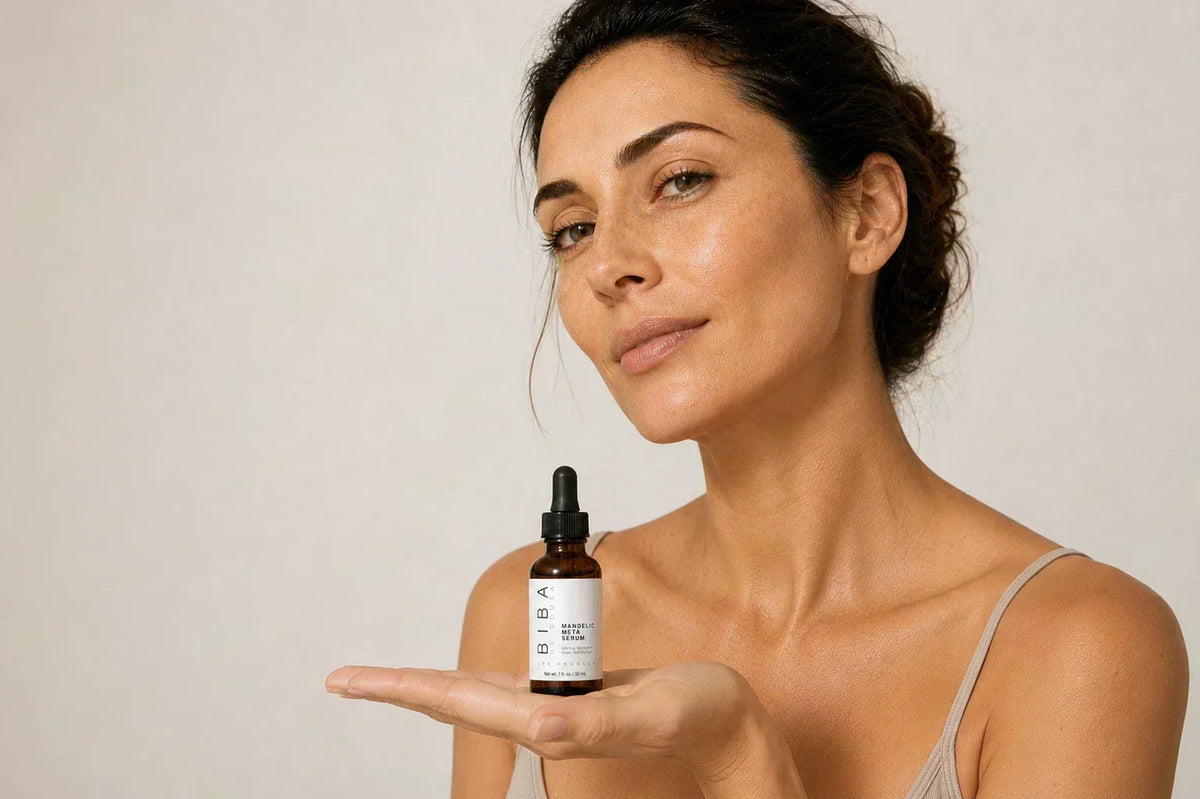
In Meta C Serum, I use a combination of L-ascorbic acid, sodium ascorbyl phosphate (SAP), and tetrahexyldecyl ascorbate (THD). Each form behaves differently; some work in water-based environments, others integrate more easily into the skin’s lipid structure, allowing for more consistent delivery and better overall tolerance.
This approach supports the skin more effectively than relying on a single, high-percentage form of vitamin C.
Vitamin C and Visible Capillaries (Facial Redness)
Vitamin C helps support collagen, which is part of what keeps skin strong and stable.
Capillaries sit very close to the surface of the skin and rely on the surrounding skin structure for support. When that structure weakens - through irritation, over-exfoliation, or sun damage, capillaries can become more visible.
These are often called “broken capillaries,” but most of the time, they’re not actually broken.
They’re simply more visible or slightly dilated.
If a capillary were truly broken, you would see bleeding or bruising.
Vitamin C will not remove visible capillaries. But it can help support the skin overall by:
- strengthening the skin environment
- reducing oxidative stress
- improving how the skin functions over time
This is why vitamin C can be helpful in routines that deal with redness, but it’s not a direct treatment for capillaries themselves. To actually remove visible capillaries, procedures such as cauterization or vascular laser treatments are required. Topical skincare can support the skin, but it cannot erase visible vessels
Supports More Even Skin Tone
Vitamin C helps regulate melanin production, which can:
- improve uneven skin tone
- soften the appearance of dark spots
- support hyperpigmentation and melasma
It works gradually and requires consistency.
👉 Read our article about management of melasma
Protects Against Environmental Damage
Vitamin C helps neutralize free radicals caused by:
- UV exposure
- pollution
- heat
This helps reduce oxidative stress, one of the main contributors to premature aging and dull skin.
Vitamin C supports sunscreen, but does not replace it.
Supports Collagen Function
Vitamin C is essential for collagen production. Without it, collagen cannot form properly.
Collagen is a key part of the skin’s structure - often referred to as the skin matrix, which gives skin its firmness, elasticity, and resilience.
When vitamin C levels decline (from age, sun exposure, or stress), the skin loses some of that support. Over time, this can show up as:
- thinning
- loss of firmness
- increased fragility
Topical vitamin C helps support this process by giving the skin what it needs to maintain collagen function.
It doesn’t “rebuild” collagen overnight, but used consistently, it helps the skin stay stronger, more stable, and better able to hold its structure over time.
Why Most Vitamin C Products Don’t Work
Vitamin C is difficult to formulate and easy to destabilize. Vitamin C is water-soluble, while the skin barrier is lipid-rich, which makes penetration challenging. This is why formulation - pH, stability, and delivery system is critical for effectiveness. People are told to go high strength, and when they do, they end up irritated, reactive, or seeing no real change.
Many products fail because:
- the formula is unstable
- the concentration is too aggressive
- the delivery system is poor
Vitamin C degrades with exposure to light, heat, and air. Once oxidized, it becomes less effective.
👉 Formulation matters more than percentage.
Why This Vitamin C Works Differently - a smarter approach
Most vitamin C products rely on one form—and push it at high percentages.
That approach often leads to irritation, instability and poor results. We do things differently:
Meta C Serum uses three forms of vitamin C, each chosen for a specific role:
L-Ascorbic Acid
Supports brightness and collagen function
Sodium Ascorbyl Phosphate (SAP)
Helps maintain clarity and is well tolerated by sensitive or acne-prone skin
Tetrahexyldecyl Ascorbate (THD)
Integrates easily into the skin and supports tone and resilience
Why this matter is because each form of Vitamin C behaves differently. Together, they allow formula to work more consistently, support the skin without irritation, remain stable over time and deliver real results, not just temporary effects.
Our Approach
Instead of overwhelming the skin with high percentages,
we use functional levels that the skin can actually respond to.
👉 Balanced formulas perform better than aggressive ones.
What You’ll See Over Time
more even skin tone
- improved texture
- stronger, more resilient skin
- less reactivity compared to traditional vitamin C serums
👉 The Meta C Serum is a sophisticated, triple-formulated product works with your skin, not against it.
How to Use Vitamin C in Your Routine
For best results
-
Use in the morning or daytime
-
Apply after cleansing (and toning if used)
-
Follow with moisturizer and sunscreen
Avoid layering with too many active ingredients in the same routine.
Consistency matters more than strength.
Professional Tips:
Before flying or heading into sunny environments, apply Vitamin C to your skin. In-flight UV exposure and oxidative stress from pressurized cabin air are real threats to your skin’s barrier and moisture. Protect yourself inside and out.
Also: once you open a Vitamin C product, use it up. Heat and air degrade its potency. Don’t save it - finish it.

Biba’s Recommendation:
Pair THE META C SERUM with:
- THE DAILY CLEANSER for a fresh, pH-balanced cleanse
- THE RETINOL META CONCENTRATE at night to encourage cellular renewal
This simple, powerful trio delivers transformative results in both the appearance and health of your skin.

1 comment
Victoria Kling
Hello,
- VictoriaI am new to your products and would like some recommendations. I love your philosophy on a simple skincare routine while others promote multiple steps. I am 65, I have mature skin (fine lines and wrinkles) that can be reactive & dry at times. My skin does tolerate Vit C & Retionl (depending on the brand strength & formulation). I have come to realize that some of the “clean” brands do use essential oils and my skin does not like that at all.
When finished with what I have, what would you recommend? Should I start with the peptide serum & retinol with one of your moisturizers? Does it make sense to use the lighter moisturizer during the day and the heavier one at night? I know tons of questions. Thank you in advance.
Hello,
- VictoriaI am new to your products and would like some recommendations. I love your philosophy on a simple skincare routine while others promote multiple steps. I am 65, I have mature skin (fine lines and wrinkles) that can be reactive & dry at times. My skin does tolerate Vit C & Retionl (depending on the brand strength & formulation). I have come to realize that some of the “clean” brands do use essential oils and my skin does not like that at all.
When finished with what I have, what would you recommend? Should I start with the peptide serum & retinol with one of your moisturizers? Does it make sense to use the lighter moisturizer during the day and the heavier one at night? I know tons of questions. Thank you in advance.