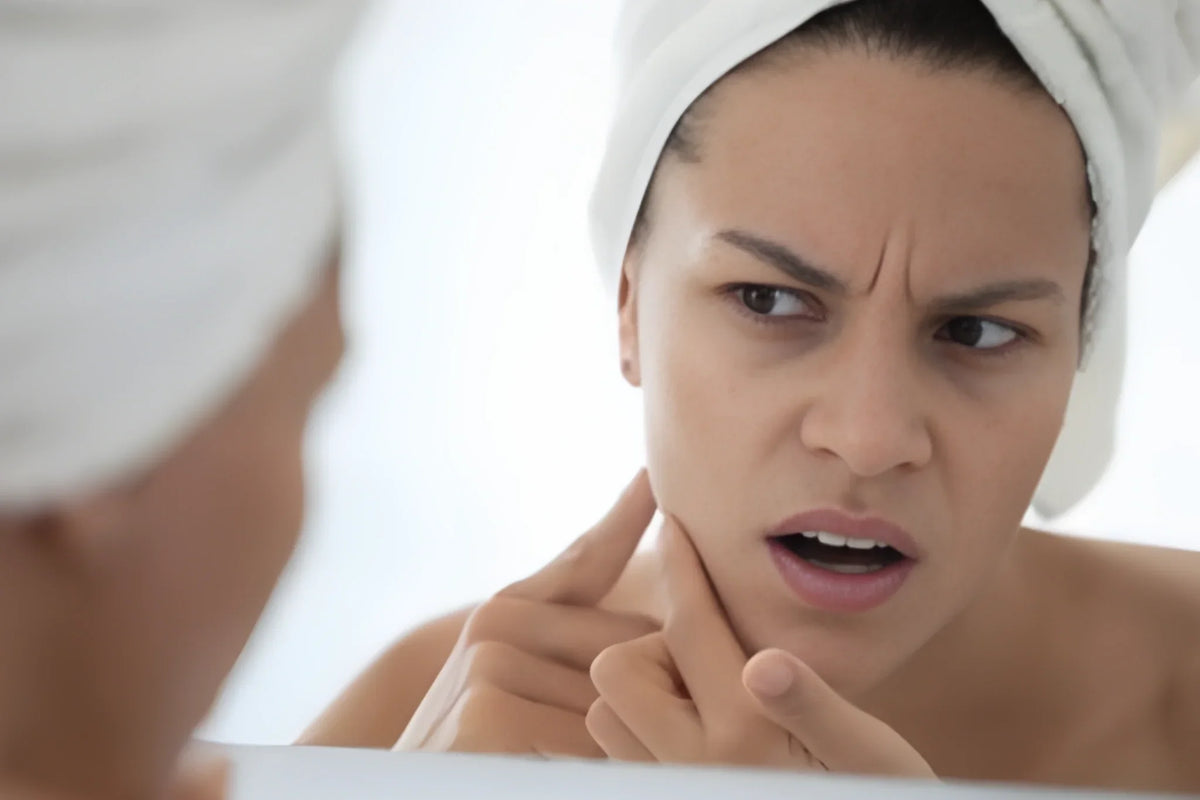

Why Heat and Humidity Can Make Skin Worse
While summer brings a glow to some, for many, hot and humid weather can wreak havoc on the skin. Heat and humidity increase sweat and oil production, leading to clogged pores, breakouts, prickly heat, tropical acne, and heat hives.
Warm, damp conditions also create an ideal environment for yeast and bacteria, increasing the risk of folliculitis and other skin infections. For those with existing skin conditions such as acne, rosacea, or eczema, heat and humidity can turn mild inflammation into persistent flare-ups.
Summer weather also changes the way skincare products behave on the skin. Rich creams and heavy occlusive products that perform beautifully during cooler months may become overly occlusive in hot, humid weather. Even products labeled "non-comedogenic" can feel too heavy during periods of extreme heat and humidity if they create excessive occlusion on the skin. Mixed with sweat, excess oil, sunscreen, and environmental debris, they can linger on the skin's surface and contribute to congestion and breakouts in acne-prone individuals.
Finally, humidity isn't the only challenge. Intense UV exposure can cause severe sunburn, trigger phototoxic and photoallergic reactions, and further compromise an already inflamed skin barrier.
Different skin conditions respond differently to heat, humidity, and UV exposure. Understanding the underlying trigger helps you prevent flare-ups before they begin.
SUNBURN
Sunlight can trigger several different types of skin reactions, ranging from simple sunburn to immune-mediated photosensitivity disorders.
Sunburn is primarily caused by UVB radiation (290–320 nm), which damages the epidermis.
- Severity decreases with higher melanin pigmentation in the skin
- Severe sunburn increases the risk of skin cancers, including malignant melanoma.
- Symptoms appear 2–6 hours after exposure, peak at 24–36 hours, and fade over 3–5 days.
- Mild sunburn cases can be treated with cool soaks, corticosteroid creams, and anti-inflammatory medications (aspirin, indomethacin). A good home remedy is a cold yogurt mask.
-
Prevention is key: avoid sun when shadows are shortest (10 am–2 pm), wear protective clothing, and use sunscreens with SPF 15+.
ACNE FLARE-UPS
Humidity slows the evaporation of sweat. Combined with increased sebum production, this creates an environment where dead skin cells, bacteria, and yeast are more likely to accumulate within hair follicles. Sweat itself does not cause acne, but when it mixes with excess oil, sunscreen, makeup, and dead skin cells, it can contribute to congestion and inflammatory breakouts in acne-prone individuals.
If your acne continues to flare despite using the right products, there may be underlying triggers beyond heat and humidity. I discuss many of them in my article on hidden causes of adult acne.
PHOTOTOXICITY AND PHOTOALLERGY:
Both phototoxic and photoallergic reactions occur when sunlight interacts with a chemical, such as a medication or a topical ingredient. Although they may appear similar, they develop through different mechanisms.
Phototoxic Reactions
Phototoxic reactions resemble an exaggerated sunburn and occur only on sun-exposed skin. They develop when certain medications or topical ingredients become activated by sunlight, causing direct damage to skin cells.
Common triggers include certain antibiotics (such as doxycycline and fluoroquinolones), diuretics, NSAIDs, antihistamines, retinoids, antifungal medications, chemotherapy drugs, and psoralens. In some cases, phototoxic reactions may result in prolonged hyperpigmentation or even nail damage.
Photoallergic Reactions
Unlike phototoxicity, photoallergic reactions are immune-mediated and occur only in individuals who have become sensitized to a particular substance. They typically present as an itchy, eczema-like rash on sun-exposed skin.
Common triggers include fragrances, certain antibiotics, and older sunscreen ingredients such as PABA.
Phytophotodermatitis ("Margarita Dermatitis")
One of the most common phototoxic reactions is phytophotodermatitis, often called Margarita Dermatitis. It occurs when certain plant compounds come into contact with the skin and are then activated by UVA light. Citrus fruits such as limes, lemons, and oranges are well-known triggers, as are celery and parsley. The result is an inflammatory reaction that may resemble a burn and is often followed by dark pigmentation. Despite its dramatic appearance, it is not an allergic reaction, but a form of phototoxicity.
Preventive Measures:
Avoid the responsible chemical/drug and sunlight exposure. Some drug-induced reactions can last for months if the chemical binds to skin proteins.
If your skin barrier is already compromised, humidity can make it even harder for your skin to regulate itself, throwing everything off balance.
Regardless of the specific condition, one principle remains the same: a compromised skin barrier struggles even more in hot, humid weather. Excess moisture, sweat, heat, and UV exposure make it harder for the skin to maintain its natural balance, increasing the likelihood of irritation, inflammation, and prolonged flare-ups.

Basic Rules for all Skin Conditions:
- Keep your barrier strong: don’t over-strip, over-exfoliate, or dry it out
- Keep the skin cool whenever possible. Heat itself is an inflammatory trigger for many skin conditions, particularly rosacea.
- Use lightweight, breathable products – no heavy oils or rich occlusives
- Protect from sun + heat triggers – physical sunscreen, cool mists, shade
- Watch for ingredients that feed yeast – especially in folliculitis, such as fatty acids and esters, oils with high Oleic content, fermented ingredients etc.
- If you're sweating heavily or spending time outdoors, remember to reapply sunscreen according to the manufacturer's directions, as perspiration and friction can reduce its effectiveness.
A Heat and Humidity-Friendly Daily Routine
1. Gentle Cleanser (AM & PM, unless your barrier is compromised.
-
- Choose a gentle foaming cleanser containing mandelic acid, sulfur, or ketoconazole, depending on your skin's needs. They are antibacterial + antifungal.
- Avoid harsh scrubs or high-foam cleansers that wreck your barrier.
- For this purpose, I recommend my THE MANDELIC CLEANSING GEL
2. Soothing Toner or Mist
-
- Look for panthenol, green tea, cucumber, zinc, or licorice root
- My THE GLYCOLIC LACTIC TONER is an excellent option for skin that becomes congested or dull in humid weather.
3. Targeted Serum (optional)
-
- For Acne: Niacinamide, Benzoyl Peroxide, Azelaic Acid, Mandelic Acid, or Salicylic Acid. For acne -prone skin, I recommend THE ACNE GEL.
- For Folliculitis: Mandelic Acid, Sulfur, or topical antifungals (if needed)
- For Rosacea: Azelaic Acid, Niacinamide, or Green Tea Extract
4. Light Hydrator or Barrier Cream
-
-
Choose a non-comedogenic, breathable moisturizer, ideally with a lightweight, water-based texture. My THE DAILY MOISTURIZER is my preferred choice because it hydrates without feeling heavy in humid weather
-
5. Physical Sunscreen (daily)
-
- Zinc oxide formulas calm inflammation and are less likely to irritate rosacea or acne
- Choose non-comedogenic, matte, fluid, or gel-textured ones for humid weather
EXTRA TIPS BY SKIN CONDITION:
For Acne:
- Use a clay or zinc mask 1–2x a week to control oil and reduce bacteria. When excess oil becomes a problem, I often recommend my THE ZINC MASK WITH GOJI BERRY PREBOTICS one or two times a week.
- Avoid occlusive makeup or heavy SPF formulas
- Don’t overdo exfoliation - exfoliate 2–3 times a week maximum.
For Folliculitis:
- Use an antifungal body wash ( mandelic acid or ketoconazole) a few times a week. I recommend THE MANDELIC CLEANSING GEL- Face and Body approved.
- Wear breathable, loose clothing, especially post-workout
- Use non-oily sunscreen on the body
- Never pick or shave over inflamed areas
For Rosacea:
- Avoid heat, spicy food, alcohol, and saunas
- Use a cooling mist or keep skincare in the fridge
- Mandelic Acid - if well tolerated, antimicrobial, Glycolic Acid, Benzoyl Peroxide - for pustules
- Green and white tea extracts, Hops, Azelaic Acid, Zinc Oxide, Licorice Extract, Beta Glucans